
Homeowners researching insulation upgrades often run into the same question: Is spray foam insulation really worth the cost?
Spray foam insulation has become increasingly popular in modern construction because of its ability to improve energy efficiency, reduce air leakage, and create a more comfortable indoor environment. Many homeowners hesitate at first because spray foam insulation typically costs more upfront than traditional materials like fiberglass or cellulose.
However, spray foam insulation is often viewed as a long-term performance investment rather than a short-term fix. When installed correctly, it can reduce energy waste, improve comfort, and provide insulation performance that lasts for decades.
For homeowners and builders in Northern Utah and Cache Valley, where cold winters and dry climates create unique insulation challenges, choosing the right insulation system can significantly impact energy bills and home comfort.
Understanding both the benefits and the limitations of spray foam insulation can help homeowners make an informed decision about whether it’s the right solution for their property.
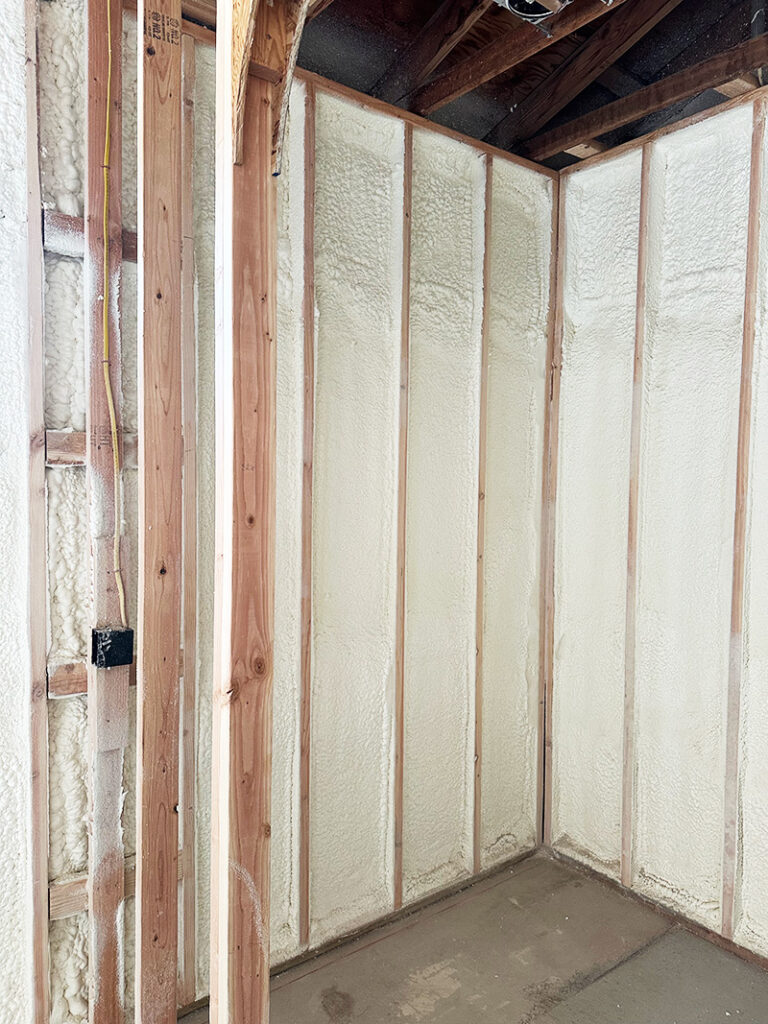
Understanding How Spray Foam Insulation Works
Spray foam insulation is a two-component polyurethane material that expands rapidly when applied. Once sprayed into wall cavities, attics, crawlspaces, or rim joists, the foam expands and hardens, creating both insulation and an air barrier. This expansion allows spray foam to fill small cracks and gaps that traditional insulation materials often miss.
There are two main types of spray foam insulation used in residential and commercial buildings.
Open-cell spray foam is lighter and more flexible. Its structure contains small air pockets that provide insulation while still allowing some vapor permeability.
Closed-cell spray foam is denser and more rigid. The cells within the foam are completely enclosed, which creates a stronger barrier against air and moisture while providing higher insulation performance.
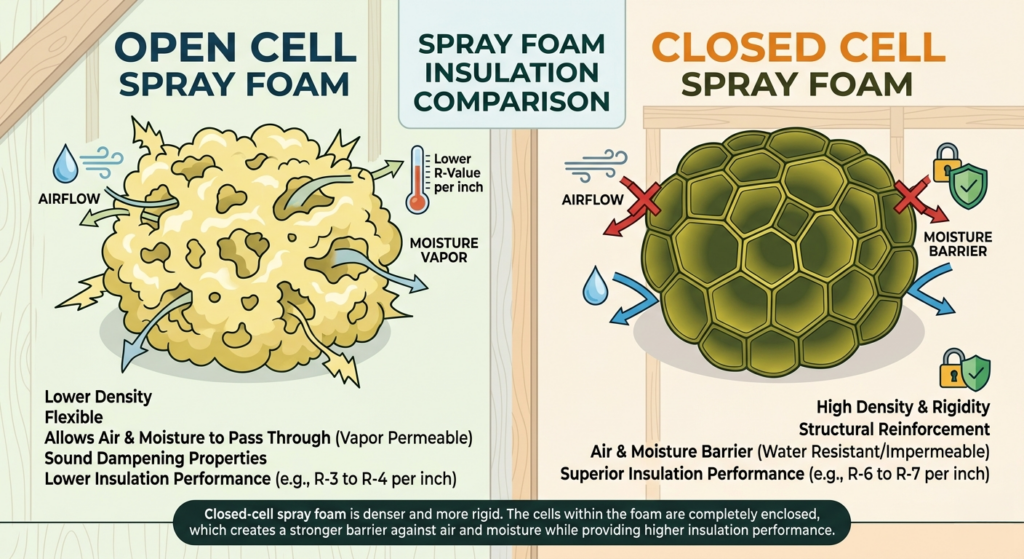
To understand insulation performance, it’s helpful to know an important technical term:
R-value measures a material’s resistance to heat flow. The higher the R-value, the better the insulation performs. Closed-cell spray foam typically provides an R-value of about 6–7 per inch, while fiberglass insulation averages around 2.9–3.8 per inch.
Spray Foam vs Traditional Insulation
| Feature | Spray Foam Insulation | Fiberglass Insulation |
|---|---|---|
| R-Value per Inch | 6-7 | 2.9-3.8 |
| Air Sealing Ability | Excellent | Poor |
| Moisture Resistance | High (especially closed-cell) | Low |
| Lifespan | 30+ Years | 10-25 Years |
| Installation | Professional Required | DIY Possible |
According to the U.S. Department of Energy, homeowners can reduce heating and cooling costs by up to 15% through improved insulation and air sealing.
Because spray foam performs both functions (insulating and sealing air leaks), it can significantly improve overall building efficiency.
Why Spray Foam Insulation Matters in Cache Valley’s Climate
Homes in Cache Valley and Northern Utah experience a wide range of seasonal temperatures.
Winter heating demands can be high, while summer temperatures still require effective cooling. In many homes, energy loss occurs not because insulation is completely missing, but because air moves through gaps in the building envelope.
Common sources of air leakage include:
- Attic penetrations
- Rim joists
- Plumbing and electrical openings
- Framing gaps
- Crawlspaces and basements
The U.S. Department of Energy reports that uncontrolled air leakage can represent roughly 25%–40% of the energy used for heating and cooling in a typical home.
Spray foam insulation helps solve this problem by expanding into these gaps and creating a continuous air seal.
For homeowners in communities such as Logan, Smithfield, Hyde Park, Providence, and throughout Cache Valley, this often leads to homes that:
- Feel less drafty
- Maintain more consistent temperatures
- Require less energy to heat and cool
Long-Term Energy Savings and Efficiency
One of the primary reasons homeowners consider spray foam insulation is its ability to reduce long-term energy consumption.
Traditional insulation materials slow heat transfer but often allow air movement through or around the insulation. When air leaks occur, the insulation’s effectiveness drops significantly. Spray foam performs differently because it creates an airtight thermal barrier.
By sealing the building envelope, spray foam reduces:
- Heat loss during winter
- Heat gain during summer
- Drafts and cold spots in the home
Heating and cooling together make up approximately 43% of energy use in the average American household, according to federal energy data.
Improving insulation performance can therefore have a meaningful impact on monthly energy costs.
While savings vary depending on the home and installation area, many homeowners notice lower utility bills after installing spray foam insulation. Over time, these savings can help offset the higher installation cost.
Another often overlooked benefit is that improved insulation can reduce strain on heating and cooling systems. HVAC systems that run less frequently may last longer and require fewer repairs.
Potential Drawbacks to Consider
While spray foam insulation offers strong performance benefits, homeowners should understand the trade-offs involved.
The most commonly discussed drawback is the higher upfront installation cost.
Spray foam insulation typically costs more than fiberglass or cellulose during initial installation. The material itself is more advanced, and the installation process requires specialized equipment and trained professionals.
However, many homeowners view this cost as a long-term investment because of the potential energy savings and durability.
Professional installation is also essential. Spray foam must be applied under the correct temperature conditions and mixed in the proper chemical ratio. Poor installation can lead to problems such as incomplete expansion or reduced insulation performance. This is why working with experienced installers is important.
Some homeowners also wonder about ventilation in tightly sealed homes.
Because spray foam creates a tighter building envelope, controlled ventilation becomes more important. Modern building practices often include ventilation systems that allow fresh air to circulate while maintaining energy efficiency.
When properly designed, a tighter building envelope can actually improve indoor comfort and reduce drafts, allergens, and outdoor pollutants entering the home.
Additional Benefits Beyond Energy Efficiency
Energy savings are often the main reason homeowners consider spray foam insulation, but several additional benefits contribute to its value.
Spray foam can improve indoor comfort by maintaining more consistent temperatures throughout the home. Rooms that previously felt drafty or difficult to heat may become noticeably more comfortable.
Closed-cell spray foam also offers moisture resistance, helping reduce the risk of condensation inside walls or crawlspaces.
Another advantage is structural reinforcement. Because closed-cell spray foam hardens after installation, it can add rigidity to walls and roof assemblies.
Open-cell spray foam can also help reduce sound transmission, making it useful in interior walls where noise control is desired. The National Renewable Energy Laboratory (NREL) notes that air sealing and insulation improvements play an important role in increasing building efficiency while also supporting durability and indoor air quality
Together, these benefits make spray foam insulation attractive for homeowners seeking both energy efficiency and improved overall building performance.
Is Spray Foam Insulation Worth It for Your Home?
For many homeowners, spray foam insulation offers a combination of energy efficiency, durability, and improved comfort that traditional insulation materials struggle to match.
Although the initial investment may be higher, the long-term performance benefits often make it worthwhile. This is especially true in climates like Northern Utah and Cache Valley, where efficient heating is essential during cold winter months.
The key factor is ensuring the insulation is installed by professionals who understand both the material and the local climate conditions.
When installed properly, spray foam insulation can provide decades of reliable performance while helping reduce energy costs and improve home comfort.
Improve Your Home’s Efficiency with Impact Insulation
If you’re considering spray foam insulation for your home or business, working with experienced professionals can make all the difference.
At Impact Insulation, we specialize in insulation solutions designed specifically for Northern Utah’s climate and building conditions.
Our team works with homeowners, contractors, and builders to ensure insulation systems are installed correctly and perform reliably for years to come. Whether you’re building a new home, upgrading existing insulation, or improving energy efficiency in a commercial space, we can help you determine the best solution for your project.
Have Questions About Spray Foam Insulation?
Every building is different. If you’re wondering whether spray foam is right for your home or building, our team is happy to help.