
When you think of insulation, you probably picture pink fiberglass batts. But for homes and businesses dealing with Northern Utah’s bitter cold winters and blazing hot summers, there’s a far more powerful option: spray polyurethane foam (SPF).
Spray Foam Creates a Seamless Barrier
Unlike traditional materials, spray foam starts as a liquid that expands to fill every single gap, crack, and seam. This creates a seamless barrier against air leaks and temperature swings, which is a game-changer for comfort and energy bills.
Insulation Services From Logan to Provo
At Impact Insulation, we’ve helped hundreds of property owners choose the perfect insulation – From Cache Valley to all along the Wasatch Front, from historic homes in Logan to new builds in Salt Lake City. Let’s break down the two types of spray foam to see which is right for you.
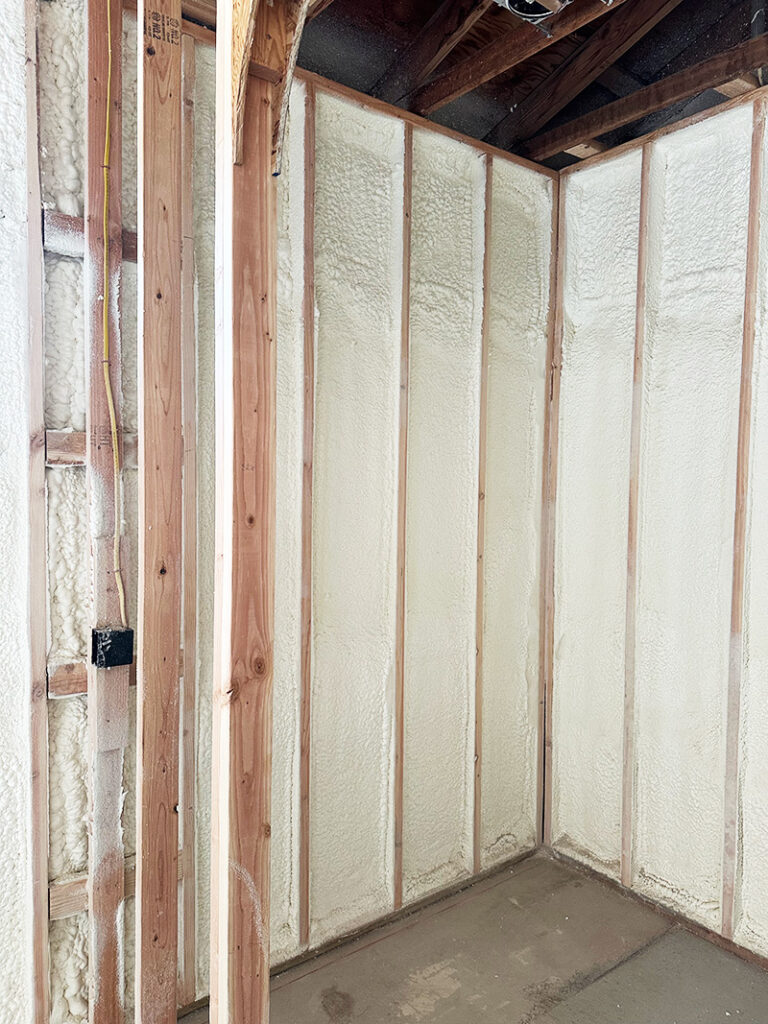
What is the difference between Open-Cell foam and Closed-Cell foam insulation?
The easiest way to tell ‘open-cell’ and ‘closed-cell’ foam apart is by their texture and density.
- Open-Cell Foam: This foam is soft, light, and spongy. Its structure is made of tiny, interconnected air pockets, allowing it to expand dramatically upon installation. This makes it fantastic for filling deep, irregular spaces like interior walls. Think of it like a dense sponge that’s excellent at absorbing sound.
- Closed-Cell Foam: This type is dense, rigid, and strong. Its cells are completely sealed and filled with a special gas (a blowing agent) that makes it highly resistant to heat flow, moisture, and air. This rigidity can even add structural strength to your walls and roof.
This structural difference directly impacts the R-value, the measure of how well an insulation material resists heat. The higher the R-value, the better it insulates.
According to the U.S. Department of Energy, open-cell foam provides about R-3.5 per inch, while closed-cell foam delivers a powerful R-6 to R-7 per inch. That superior R-value means closed-cell can provide more insulation in less space, making it ideal for wall assemblies or rooflines with limited depth.
Which Foam Is Best for Utah’s Climate?
In places like Northern Utah, Southeastern Idaho and Western Wyoming, where we see heavy snow and dry heat, managing moisture is just as important as managing temperature.
Moisture and Vapor Control
During our cold winters, warm, moist air from inside your home can seep into your walls and attic, where it can condense and cause mold or rot. This is where closed-cell foam truly shines.
Closed-cell foam is a vapor barrier. Its low permeability acts like a Gore-Tex jacket for your house, blocking moisture from getting in while still allowing the building assembly to dry out. Open-cell foam, however, is vapor-permeable, meaning it will allow moisture to pass through it. While this can be useful in some hot climates, it’s a risky choice for a Utah winter unless paired with a separate, professionally installed vapor retarder.
Basements and Crawlspaces
For basements and crawlspaces in areas prone to groundwater seepage, closed-cell foam is the clear winner. In fact, FEMA recognizes it as a flood-damage-resistant material.
Soundproofing and Noise Reduction
If you’re looking to reduce noise between rooms or from the outside, open-cell foam is your best friend. Its soft, spongy structure is fantastic at absorbing airborne sound waves, making it a popular choice for home theaters, bedrooms, and office partitions. While closed-cell foam will seal air gaps that carry sound, it isn’t as effective at dampening the sound itself.
Cost vs. Long-Term Value
Let’s talk about cost. On a per-inch basis, open-cell foam is generally less expensive. This makes it a cost-effective choice for filling deep cavities where you need to deaden sound, like interior walls or some attic slopes.
Closed-cell foam costs more upfront, but it’s an all-in-one solution. It delivers a higher R-value, a vapor barrier, and added structural strength in a single application. For many Northern Utah buildings, this means better performance and moisture safety without needing extra products or steps, ultimately providing superior long-term value.
Quick Guide: The Right Foam for Your Space
Here’s a quick guide we use when recommending foam types for local homes and businesses:
| Location in Your Home | Recommended Foam | Why It Works for Northern Utah |
| Attics & Roof Decks | Closed-Cell | Manages extreme temperatures and prevents winter condensation risk. |
| Exterior Walls | Closed-Cell or Open-Cell + Vapor Barrier | Closed-cell offers an all-in-one solution; open-cell is a budget-friendly alternative if properly managed. |
| Basements & Crawlspaces | Closed-Cell | Flood-resistant and stops moisture/groundwater seepage. |
| Interior Walls (for sound) | Open-Cell | Superior soundproofing for a quieter home. |
| Metal Buildings & Barn | Closed-Cell | Adheres directly to steel and creates a powerful condensation barrier. |
Pro Tip: Learn more about our specialized attic insulation services and basement insulation solutions designed for residential properties.
Why Trust Impact Insulation for Your Project?
In a climate as unique as Northern Utah, there’s no “one-size-fits-all” answer. We’re not just installers; we’re local building science experts. We’ve worked on everything from drafty old farmhouses in Preston to brand-new commercial buildings all along the Wasatch Front in Brigham City, Salt Lake Valley and Provo. We understand the specific challenges of local construction and use the latest HFO-blown foam agents with low climate impact, as recognized by the EPA’s SNAP program.
Every project we complete follows strict industry best practices and is designed for decades of performance and efficiency.
Have Questions About Spray Foam Insulation?
Every building is different. If you’re wondering whether spray foam is right for your home or building, our team is happy to help.