
If you operate a business out of a metal building in Northern Utah or Cache Valley, you know the reality: energy bills can swing wildly. In winter, cold air penetrates quickly, forcing heating systems to work harder. In summer, metal walls and roofs absorb sunlight and radiate heat inward, forcing your cooling systems to work overtime.
With energy prices rising, many business owners are searching for the most impactful, cost-effective solution. Among dozens of potential upgrades (HVAC improvements, renewable energy, or operational tweaks), one strategy stands out as the foundation for all others: a well-designed, high-performance insulation system.
Why Insulation Is the Cornerstone of Energy Savings
Unlike HVAC upgrades or renewable systems, insulation doesn’t create energy. Instead, it ensures you use less energy to maintain a stable indoor environment. That means lower utility bills, longer equipment lifespans, and improved comfort for everyone inside.
For metal buildings specifically, insulation is even more critical. Steel has a high thermal conductivity, meaning it quickly transfers outdoor temperatures inside. Without a barrier, your building acts more like a greenhouse in summer and a freezer in winter.
A quality insulation system provides:
- Thermal resistance. Slows down heat transfer, keeping conditioned air inside.
- Moisture control. Prevents condensation that can lead to corrosion, mold, or damaged inventory.
- Durability. Reduces stress on roofing and wall systems, extending the building’s lifespan.
The U.S. Department of Energy confirms that insulation improvements remain one of the most cost-effective ways to reduce energy consumption in commercial buildings (energy.gov).
What is R-Value and Why Does It Matter?
You’ve probably heard contractors, engineers, or building codes reference “R-Value.” But what does it mean, and why is it important for metal buildings?
R-Value measures a material’s resistance to heat flow. Simply put:
- Higher R-Values equal better insulation performance.
- A higher R-Value slows the transfer of heat between indoors and outdoors, keeping your heating and cooling costs down.
For example:
- An uninsulated metal roof may have an effective R-Value close to R-1.
- Adding quality insulation can boost that number to R-30 or higher, dramatically reducing heat gain and loss.
The Environmental Protection Agency notes that cool roofs and reflective technologies, when paired with high-R-Value insulation, can reduce cooling demand by 11–27% (epa.gov).
Features of an Effective Insulation System
When upgrading your building in Utah, Idaho or Wyoming, not all insulation solutions are created equal. Here are the key features to look for:
1. High R-Value, Layered Systems
Metal buildings benefit most from layered insulation approaches that combine thermal resistance with vapor barriers. This approach combats both heat transfer and condensation, which is especially important in Northern Utah’s climate.
2. Proper Air Sealing
Even the best insulation won’t perform well if air can leak through seams, penetrations, or improperly sealed joints. Air sealing minimizes drafts, improves comfort, and prevents wasted energy.
3. Moisture Barriers
Northern Utah, Idaho and Wyoming experience rapid temperature swings, which can cause condensation to form on unprotected steel. A vapor barrier prevents this moisture from entering the insulation system and protects against mold, corrosion, and structural damage (energy.gov).
Why This Matters in Northern Utah
Local Climate Challenges
Our region experiences all four seasons, sometimes in the same week. Winters bring prolonged freezing temperatures and heavy snowfall, while summers are hot and dry with strong sun exposure. These swings create ideal conditions for:
- High heating costs in winter.
- Increased cooling demand in summer.
- Condensation issues during the spring and the fall.
Business Impacts
- Warehouses & Manufacturing: Poor insulation leads to overheated machinery in summer and frozen pipes in winter.
- Agricultural Facilities: Livestock, produce, or grain storage require consistent climate control. Insulation reduces energy waste while protecting valuable inventory.
- Workshops & Offices: Comfort impacts productivity. Employees work better in spaces that maintain stable temperatures.
Faster ROI in Our Region
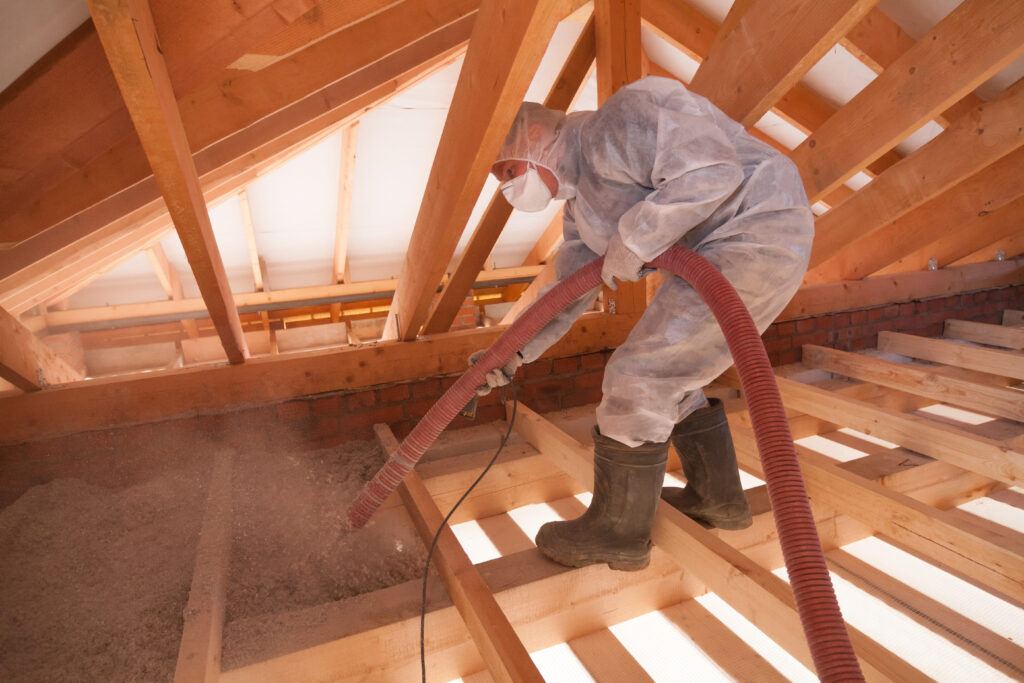
Because of our climate extremes, insulation improvements here pay off faster than in more temperate climates. Energy savings accumulate quickly, making it a smart long-term investment for business owners.
How do you Upgrade to High-Performance Spray Foam Insulation?
1. Schedule a Professional Assessment
Every building is unique. Impact Insulation offers tailored evaluations that identify problem areas, calculate optimal R-Values, and recommend the right materials for your specific building.
2. Select the Right Spray Foam Insulation
Choose insulation designed for metal buildings, with a focus on:
- High thermal resistance (R-Value).
- Vapor barriers.
- Compatibility with reflective roof coatings or membranes.
- Decide whether open-cell or closed-cell spray foam insulation is best (we will help you with this).
3. Focus on Quality Installation
Poor installation can reduce insulation effectiveness by as much as 30%. Properly installed systems (sealed seams, taped joints, and snug fits) maximize energy performance.
4. Maintain Your Investment
Inspect your insulation system annually. Look for gaps, moisture intrusion, or degraded seals. Simple maintenance ensures long-term performance and sustained energy savings.
How Quickly Insulation Can Change a Space
Winter:
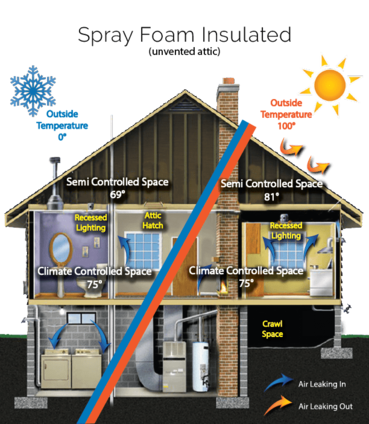
One of the most striking things about insulation is how fast the difference can be felt. In one of Impact Insulation’s winter projects, after spray foam was applied to foundation walls, the basement temperature was 10 degrees warmer the very next day without touching the thermostat.
Summer:
In another, a thin layer of spray foam added as a radiant barrier at the roof deck dropped attic temperatures from around 115°F to 75°F.
Results like these show that insulation doesn’t just make a long-term impact on energy bills, but it can also bring an immediate shift in how a space feels. For metal buildings, which react quickly to outside temperatures, the change can be even more noticeable.
Quick Recap
| Focus Area | Why It Matters for Business Owners |
| Strategic Insulation | Reduces year-round energy bills, prevents moisture damage. |
| R-Value | Higher R-Value = better energy efficiency. |
| Proper Air Sealing | Prevents energy leaks and drafts. |
| Moisture Barriers | Protects against mold, corrosion, and damage. |
| Regional Relevance | Faster ROI due to Utah’s climate extremes. |
| Implementation Steps | Assess → Select → Install → Maintain |
Take the Next Step with Impact Insulation
If you own or manage a metal building in Northern Utah, Southeastern Idaho, or Western Wyoming, there’s no better time to act. Rising utility costs, unpredictable weather, and increasing demands for energy efficiency mean insulation upgrades deliver both immediate and long-term benefits.
At Impact Insulation LLC, we specialize in helping business owners reduce costs and protect their investments with insulation systems built for our region’s climate. From warehouses and workshops to agricultural facilities, our team has the experience to deliver results you’ll feel in your wallet and your workspace.
Have Questions About Spray Foam Insulation?
Every building is different. If you’re wondering whether spray foam is right for your home or building, our team is happy to help.